“Good taste needs rule-breaking.”
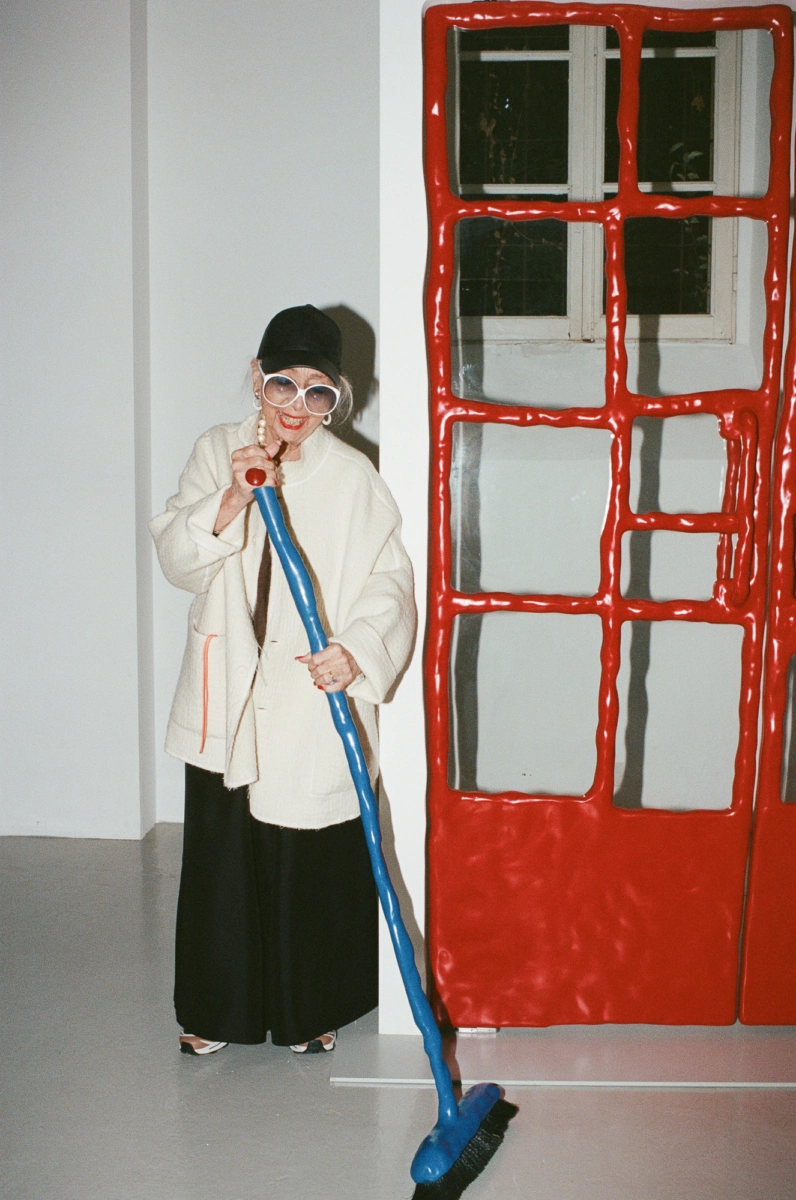
In what is arguably Milan’s most extraordinary design gallery, nothing is quite as one might expect from such a place. For more than two decades, Rossana Orlandi has been collecting unconventional and curious objects here, proving that good taste has little to do with following the rules. In the final days of summer, we set off on a journey of discovery through her universe – a world in which even a broom can become a masterpiece and in which beauty also reveals its dark side.
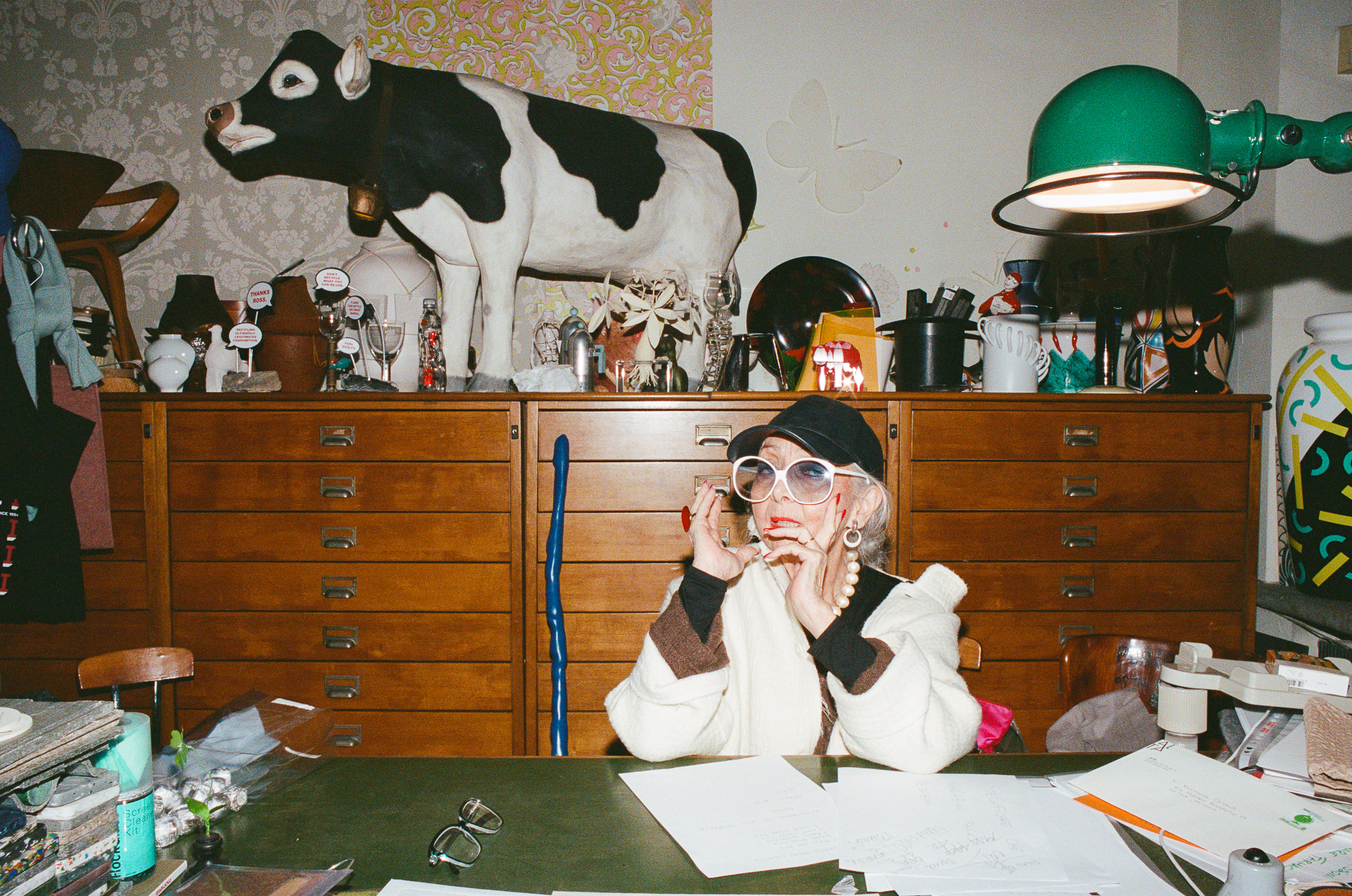
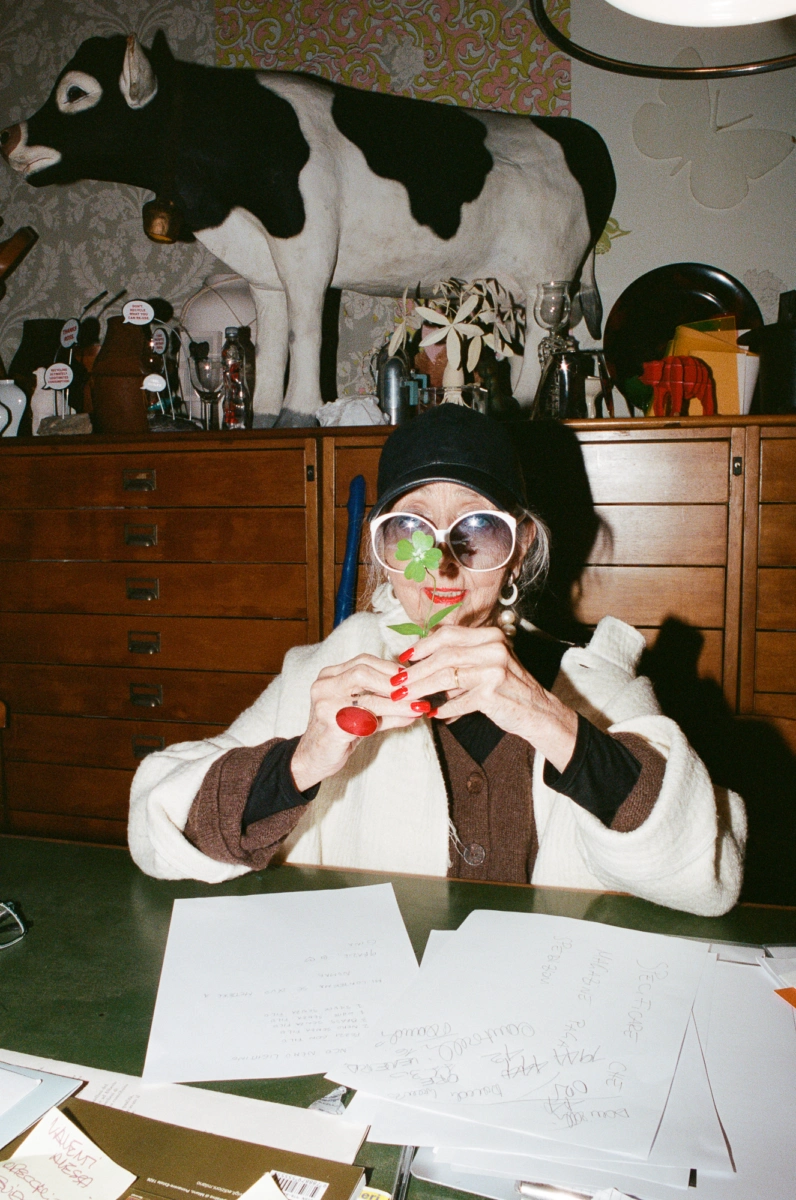
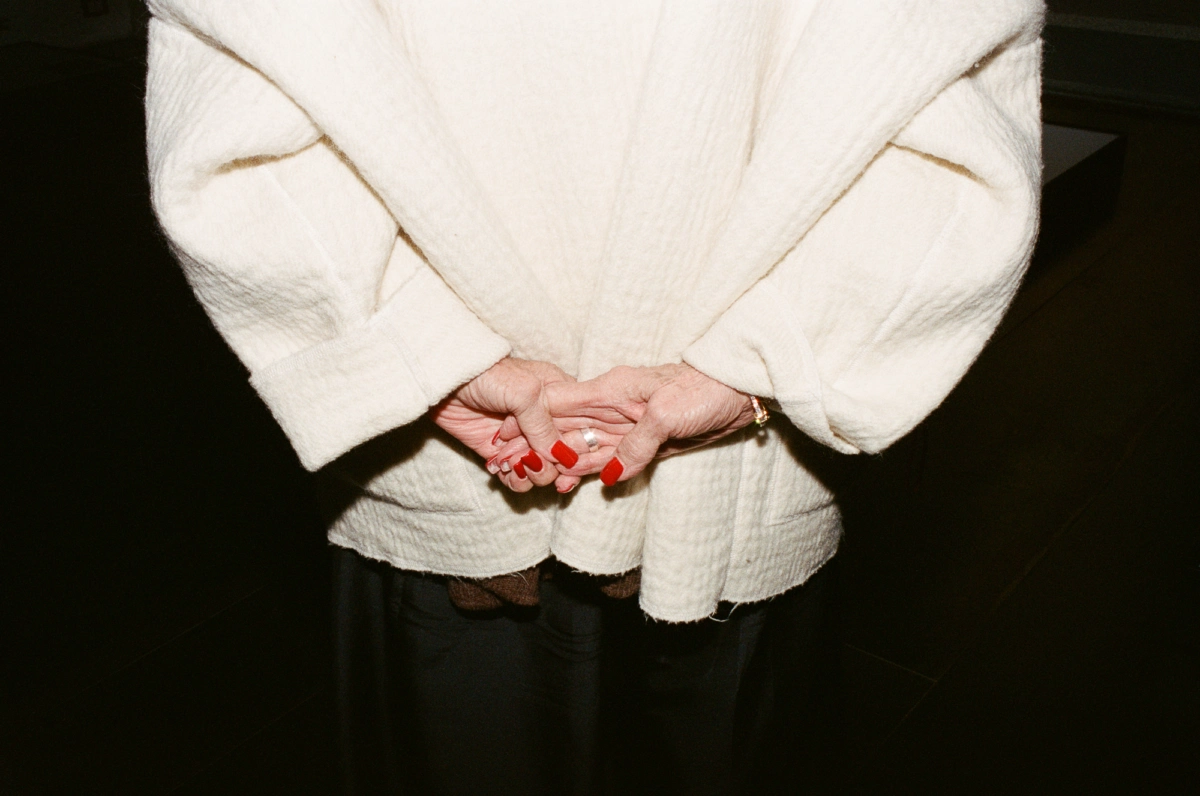
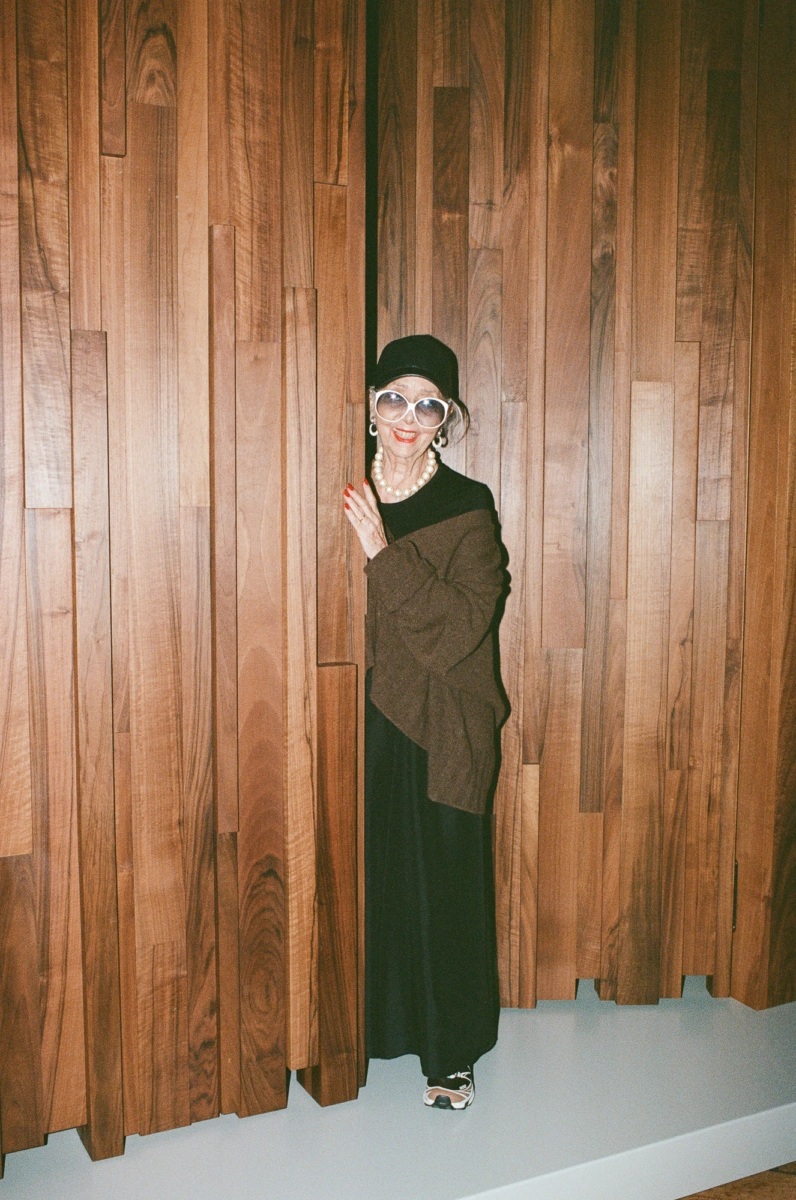
On the day of our visit, Rossana Orlandi’s fingernails gleam in a brilliant red. They are filed to a perfect square shape, though currently far too short for her liking. She looks at us warmly through her oversized spectacles, the design of which has remained unchanged for decades. Their striking shape has long since become her trademark. When I mention her nails, she laughs. “Sometimes I even use them as a screwdriver.” A remark that reveals a great deal about a woman who has spent her whole life playing with traditional notions of beauty, questioning conventions and bringing together seemingly incompatible elements.
Orlandi is one of the most influential figures on the international collectable design scene. Yet this description hardly does her justice. She is not only a gallery owner, but also a collector, talent scout, florist, former fashion designer and curator – and she pursues all these roles with great passion. Above all, she has the ability to see something in objects that remains hidden to others.
For three decades, Orlandi was at home in the fashion industry. In 2002, she embarked on a new chapter and opened her own gallery. Today, the Milan-based gallery is one of the most important destinations in the international design world.
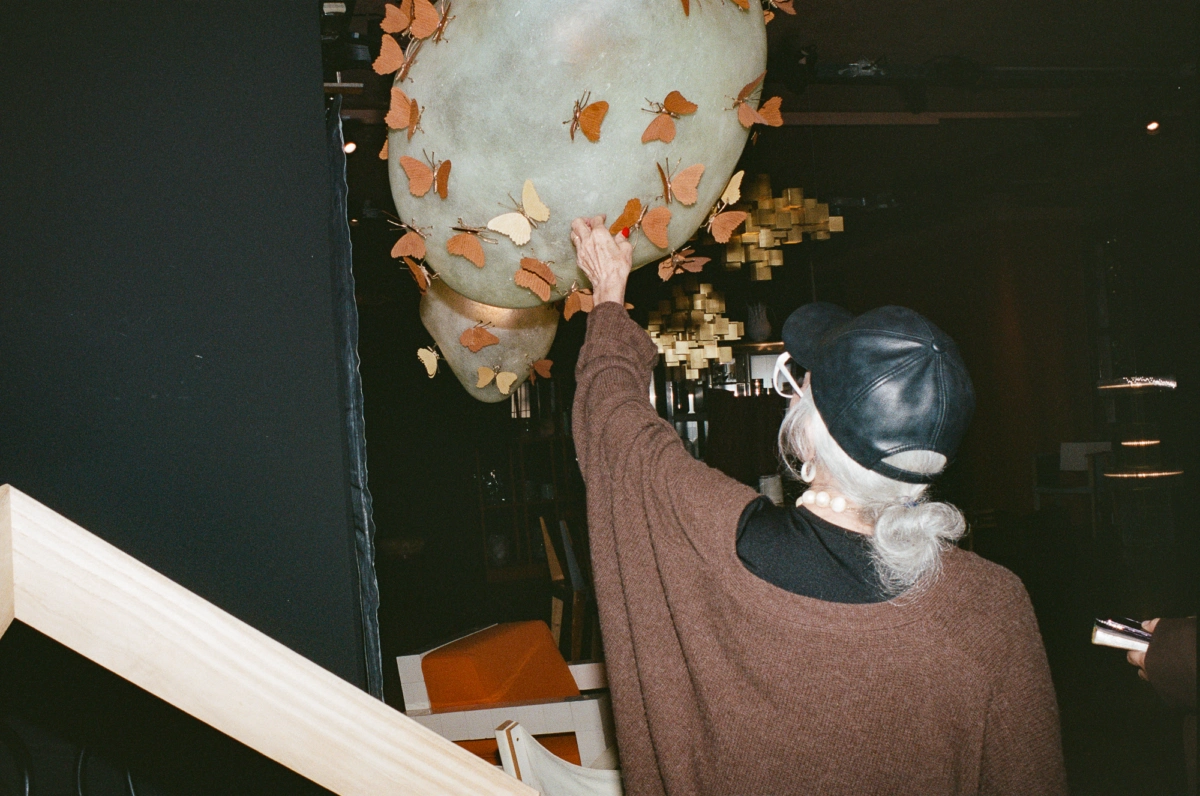
The ‘Butterfly Asteroid’ light sculpture by the American designer David Nosanchuk.
Between Experimental and Historical
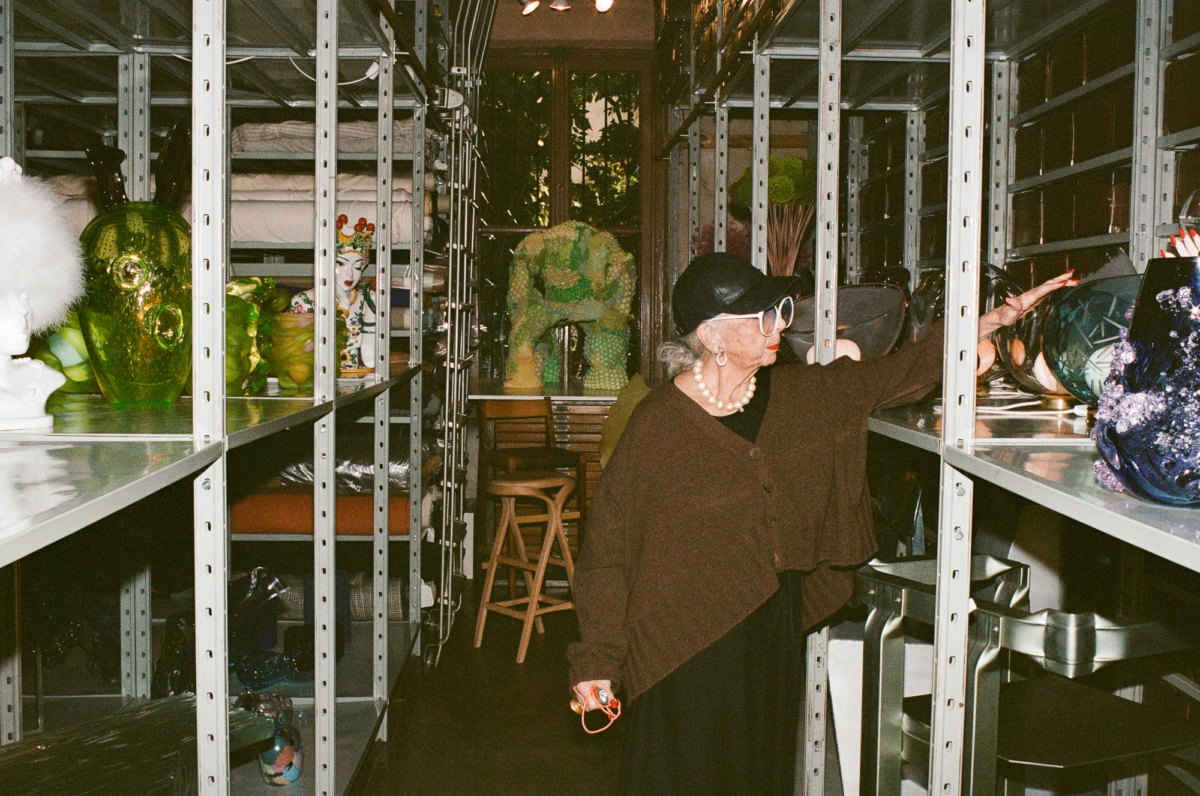
Her gallery, tucked away behind the walls of a former 19th-century tie factory on the upmarket residential street Via Matteo Bandello in Milan, is arguably the most accurate reflection of her personality. Furniture stands alongside sculptures, experimental pieces find their place next to historical ones, and young designers share the space with established masters of design. At first glance, there is no discernible chronology, hierarchy or stylistic order. Orlandi shows us round, and it soon becomes clear that she has little patience for mediocrity, and even less for poor-quality fakes and imitations. She loves a bit of mischief and a surprise. Supporting talented designers, often over the course of decades, is a matter close to her heart.
Her story, however, begins long before she opened her gallery. For three decades – throughout the 1970s and 1980s – Orlandi worked in the fashion industry, primarily with textiles and knitwear. “One of the most exciting periods in fashion history,” as she recalls. Prêt-à-porter was on the rise, and unconventional designs and new materials such as PVC, vinyl, polyester, nylon and stretch synthetic fibres created a sense of excitement and new beginnings. Orlandi raves about the early Kenzo fashion shows, which shook up the stuffy Parisian fashion world with their colourful designs and exuberant atmosphere. It was a time when people would move from one event to the next, getting to know one another, having a drink together and, in the process, coming up with new ideas. It was the era of Mary Quant, one of the most important pioneers of 1960s youth fashion, and of Vivienne Westwood, the trailblazer of punk fashion – the heyday of designers who broke with convention and fundamentally transformed fashion.
At that time, Orlandi had a particular passion for knitwear. She was fascinated by the possibility of creating the shape and structure of a garment directly from the yarn. Orlandi collaborated in this field with some of the most renowned fashion designers of her time. One in particular has remained in her memory: Issey Miyake. The Japanese designer was known for his experimental designs and his innovative use of fabrics. But what impressed Orlandi most about him was his respect for craftsmanship. “Without the craftspeople, there is nothing,” she emphasises. “The finished piece shows only a fraction of what went into its creation.”
Inspiration, not plagiarism!
Perhaps that also explains why Orlandi is so sensitive to imitations. “Being inspired is one thing. Copying something without understanding the process behind it is quite another. Anyone who simply plagiarises an object is disregarding the creative and craftsmanship that went into it.”
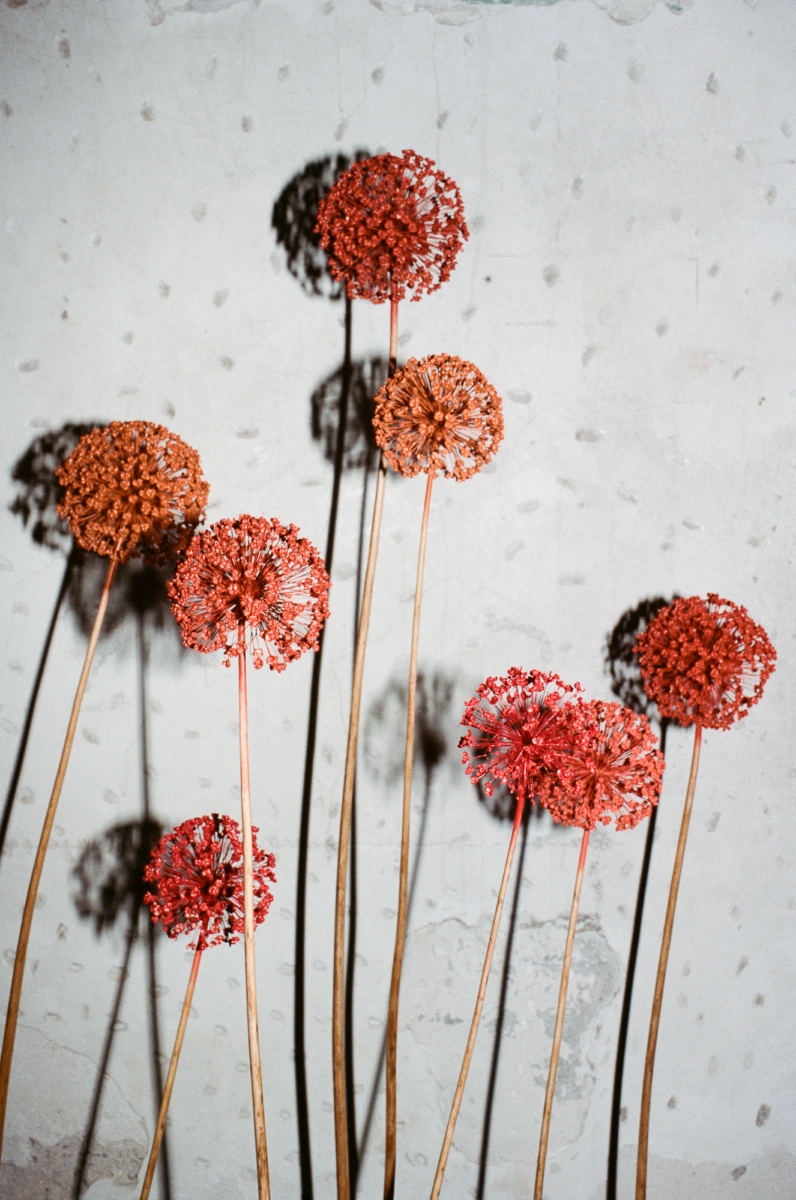
Orlandi originally wanted to pursue a completely different career: that of a florist. “I wavered for a long time between fashion and flowers. In the end, I opted for fashion because plants wilt.” However, she has never quite let go of that passion. Flowers are everywhere in her gallery, many of which she grows herself. She even has some flower bulbs specially imported from Peru.
After leaving the fashion industry, Orlandi discovered the former tie and scarf factory in Milan in 2002, which had been founded at the end of the 19th century by the Leipzig-born textile entrepreneur Hermann Prochownick. Orlandi had actually intended to live here with her husband and two children. But things turned out differently: the complex, covering around 2,500 square metres, became one of Milan’s most extraordinary design galleries.
The town’s industrial past remains visible to this day: in the former sprawling workshops, the beautiful old factory offices and the many old brown storage crates that Orlandi has kept and now uses for her archive. “I didn’t have a business plan or a clear curatorial concept to begin with. For about a year, I thought about how I could make use of the spaces.” It all began in 2002 with an exhibition of photographs, sculptures and graphic works, organised by her daughter Nicoletta Orlandi Brugnoni – now the gallery’s curator – together with friends. Gradually, further exhibitions were added, and the gallery began to take shape.
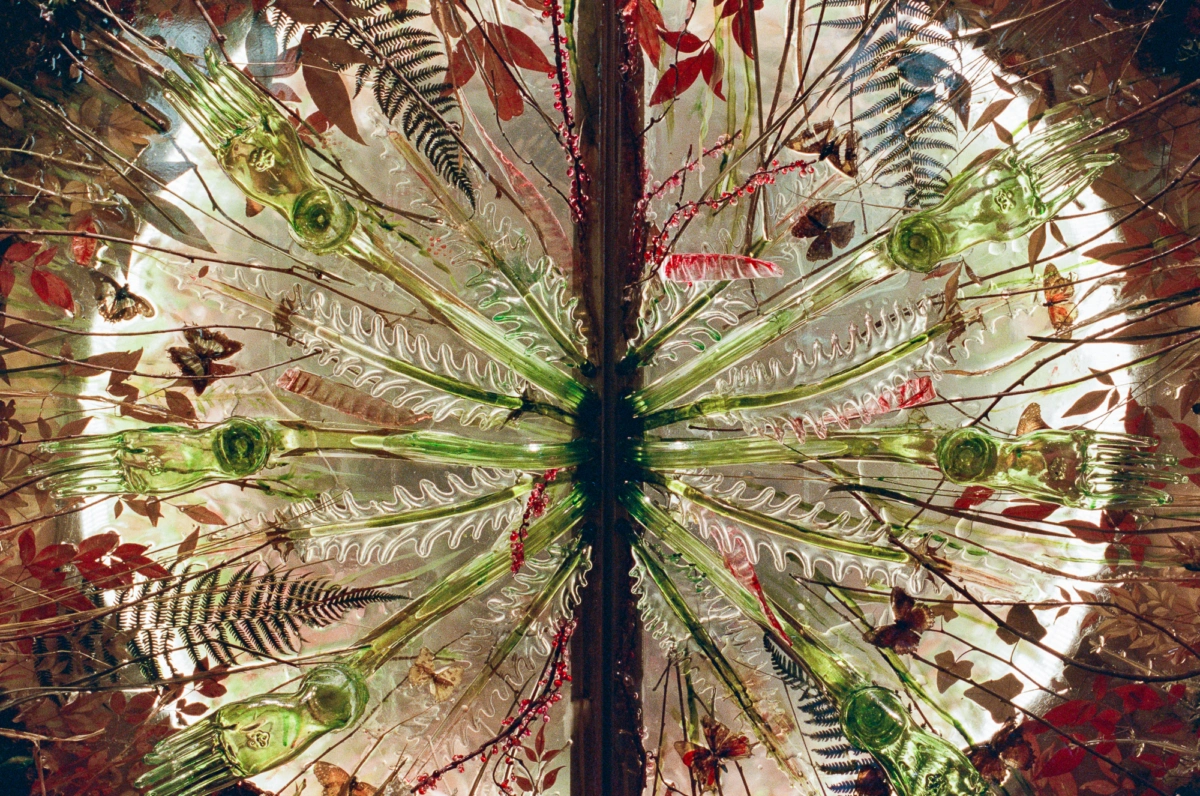
“Sacro Fare” (“Sacred Action”) by Emanuela Crotti. The Italian artist and designer has been working closely with the Galleria Rossana Orlandi for more than 15 years. Crotti’s trademark works are “tableaux vivants” (“living pictures”). These are kaleidoscope-style collages created using epoxy resin.
“I love my designers and they love me.”
In the early 2000s, Orlandi began searching for young talent at international design fairs. She was particularly fascinated by the experimental Dutch design scene centred around the Design Academy Eindhoven, where young designers were burning furniture, creating new objects from waste and challenging the boundaries between art and design. She has particularly vivid memories of Li Edelkoort, the renowned trend forecaster and then head of the academy. “Her intelligence and authority almost intimidated me at first,” she says. One of the first designers Orlandi brought into her gallery was the British designer Sebastian Wrong. His ‘Spun Light’ lamp, which was later produced by Flos, has long since become a design classic. Orlandi was immediately impressed.
The Maison&Objet trade fair in Paris also became a place of new discoveries for the gallery owner. Instagram didn’t exist back then. She jotted down names and contact details in her notebooks. Sometimes she would come across a piece that captivated her, make a note of the name, and then lose track of the designer. It was only years later that they met again. Among the creative talents with whom Orlandi went on to collaborate are, for example, the Spaniard Nacho Carbonell, known for his organically shaped furniture and lighting, the Dutchman Maarten Baas, who caused a stir with his series of charred furniture, and his compatriot Piet Hein Eek, who crafts design pieces from wood offcuts. All three found a place in the gallery early on with their work. Whether a designer is currently in vogue or whether their work sells well is of little interest to her. What matters is whether she herself is enthusiastic about it.
“I have to fall in love with a piece,” she admits. First comes the enthusiasm for a design, then the curiosity about the person behind it. Over the years, such encounters have given rise to close, often very personal relationships. “I love my designers, and they love me.” Anyone who exhibits at Orlandi apparently doesn’t just end up in the gallery, but sometimes also becomes part of the extended family.
The red door is called ‘Clay Door’ and was designed by the Dutch designer Maarten Baas.
“GUILTLESSPLASTIC”
Orlandi enthusiastically shows me her latest exhibition, “DOORS”, which she curated together with her daughter Nicoletta for Milan Design Week 2026. Nineteen designers, artists and architects were invited to rediscover the door as a design element. “Nowadays, doors are often hidden behind wallpaper or integrated into walls so as to be as inconspicuous as possible. In the past, they were important architectural elements,” she explains. In her exhibition, they become design objects in their own right: Michele De Lucchi designs a geometric wooden structure, Patricia Urquiola incorporates sunflower and grape seeds into a security door, whilst Joost van Bleiswijk draws inspiration from punk and saloon doors. A fine example of how the design expert herself manages to uncover surprising facets even in such an everyday object.
Soon, our conversation turns to materials, particularly plastic. “It’s not plastic that’s the problem, but how we deal with it!” exclaims the gallery owner, exasperated. Together with her daughter Nicoletta, she has launched the “GUILTLESSPLASTIC” initiative in Milan. Through international competitions, exhibitions and discussion events, she brings together designers, artists and companies to develop new ways of using plastic waste. She wants to show that plastic waste can become more than just the next park bench made from recycled plastic.
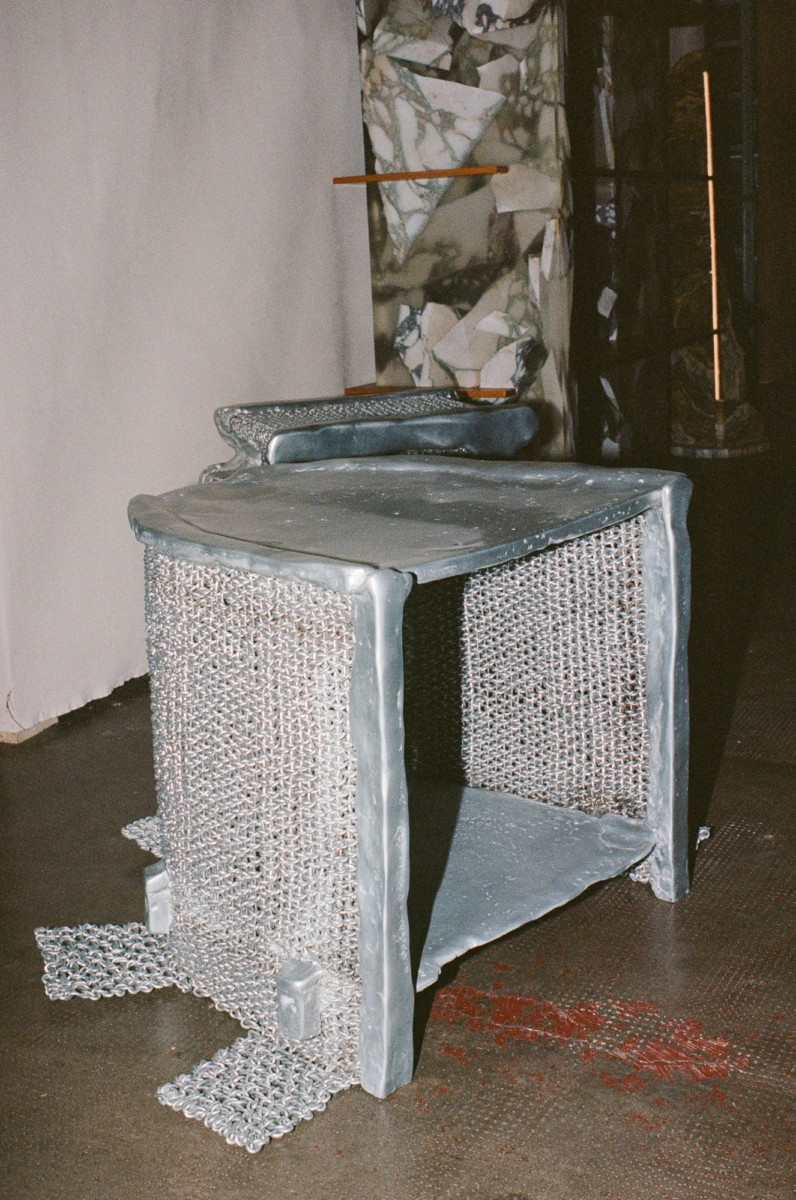
More than 400 designers from around the world are now represented in Orlandi’s gallery. We take a neon-lit freight elevator upstairs with her. What a lovely detail. Up here, all sense of order is well and truly gone. While the ground floor is still relatively orderly, upstairs is a glorious jumble. Furniture, lighting, sculptures, curious finds – everything is scattered, suspended and stacked in every direction. There are Emanuela Crotti’s found objects cast in resin, the sculptural lamps by MJ Fraser and Piet Hein Eek’s furniture made from reclaimed wood. Two metal chairs by young designer Nicolas Zanoni look as though they might once have served as medieval torture devices. Alessandro Ciffo transforms silicone into objects, while the glass works by Draga & Aurel play with light and colour. And scattered throughout are things that defy any attempt at categorisation. This is Orlandi’s universe.
Right: Furniture pieces from French designer Nicolas Zanoni’s distinctive “Fuzzy” collection.
The tour is practically over when our host suddenly remembers something she absolutely has to show us. This time, we head down into a dark basement room. We pull out our phones and use the flashlights to peer inside. Gradually, a sofa and an armchair emerge from the darkness, their massive marble frames in surprising contrast with the bright orange upholstery.
Now we really are done. Or are we? Eventually, we manage to persuade Orlandi to pose for a photo in her office. As a parting gift, she gives us Nonino-Lindt chocolates. I’ll take one home as a souvenir and keep it on my dining table.
Here, there is little distinction between old and new, art and design, living and working. A gallery is a shop, a shop is a home, a home is a workspace. After all, life doesn’t unfold in neatly defined categories either. It simply happens. So why should Rossana Orlandi’s world be any different?
ROSSANA ORLANDI is an Italian gallerist and one of the most influential figures in the world of collectible design. After nearly 30 years in the fashion and textile industry, she opened her design gallery in Milan in 2002. During the summer months, she also runs the Rossana Orlandi Summer Gallery in Porto Cervo, Sardinia. She is equally renowned for her eye for exceptional talent, which she has a knack for discovering and nurturing. Through her initiative “GUILTLESSPLASTIC”, she also advocates for the reuse of plastics and a more responsible approach to resources.
Amanda Luna Ballerini is a writer and cultural scholar based in Italy. Her work focuses on connecting diverse artistic practices with the social phenomena that surround them.
Guglielmo Daloiso is an Italian photographer based in Milan. He works primarily with analogue photography, moving between portraiture, fashion, art and cultural documentation. With an observational approach, his practice explores the relationship between people, their surroundings and the social rituals of everyday life. He is particularly drawn to intimate and incidental moments.