Fur existed long before humans even knew what clothing was. But over time its importance faded—relegated to pimps and prostitutes, it was abandoned by the fashion world in response to protests by animal rights activists. It has now resurfaced in the form of fake fur, today it is even being grown in laboratories. Cozy or cruel? We talk to fashion theorist Barbara Vinken.
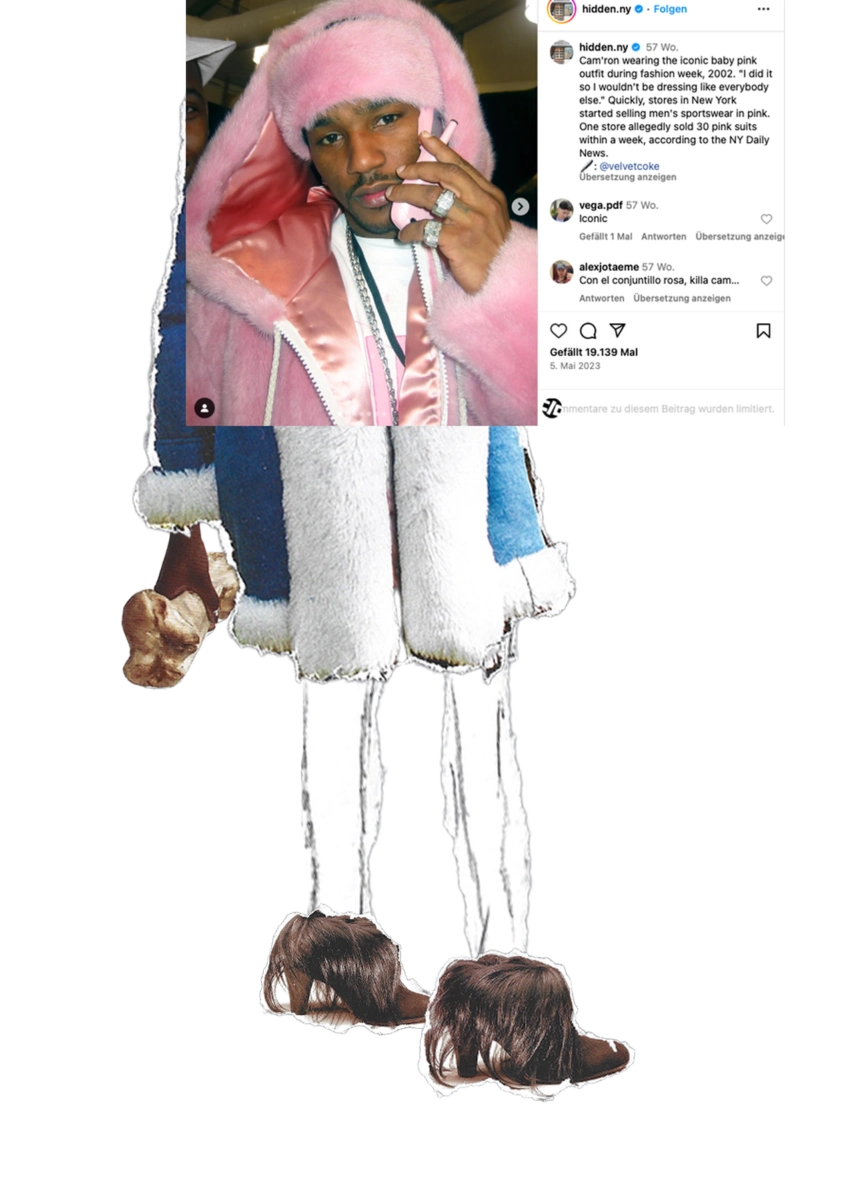
In 2002, American rapper Cam'ron caused a 'Killa Pink' moment during New York Fashion Week: with an all-over pink look - fur coat, hat and even a flip phone - he intentionally broke the norms of male rappers, who mostly wore loose and unremarkable outfits at that time.
Elisa Promitzer: Why do people wear the lifeless husks of animals?
Barbara Vinken: Real fur is a practical, warm material; it decomposes and doesn’t litter the sea with plastic like synthetic fur does, which is made from crude oil.
But then there is the ethical question...
... of whether people should kill animals to protect themselves from the cold. Second-hand fur is a good compromise. These days it’s practically an ocean of fur in New York and Paris, you can getting lost among vintage fur, faux fur, and real mink coats.
There was no discussion about morality in the Stone Age. It was simply a matter of survival.
Fur is already depicted in cave paintings, people wore aprons to protect themselves from the cold. It’s the original form of clothing.
Northern European tribes traded in fur, in Siberia people wore outfits covered in spikes to protect themselves from bears, soldiers braved the cold in fur uniforms. When did fur go from being a utilitarian item to being perceived as a luxury?
Fur was already regarded as a status symbol in ancient times. From the 11th century onwards, who was allowed to wear what kind of fur and how much of it was regulated down to the last centimeter. Fur also has a religious dimension—leopard fur was associated with Dionysus, the Greek god of wine, joy, fertility, madness and ecstasy. Think of Gautier’s leopard collection today.
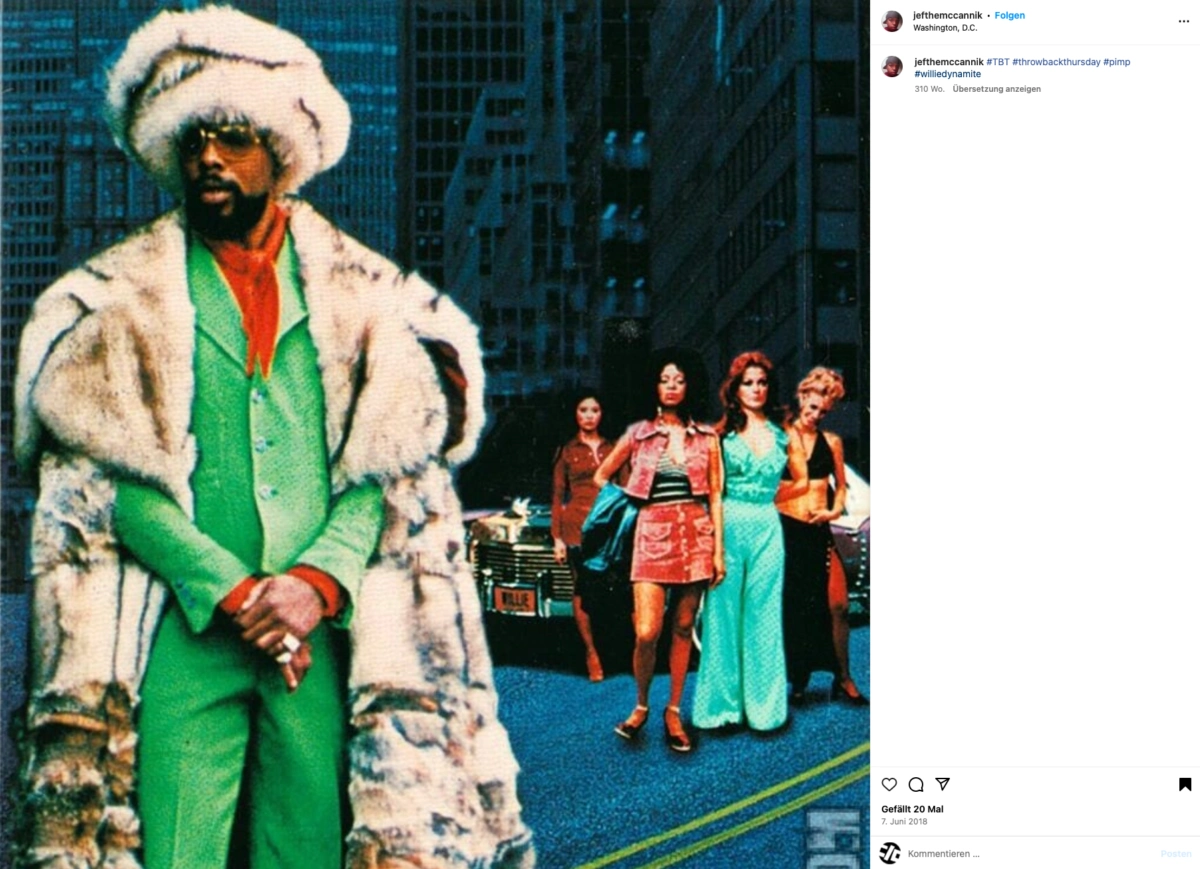
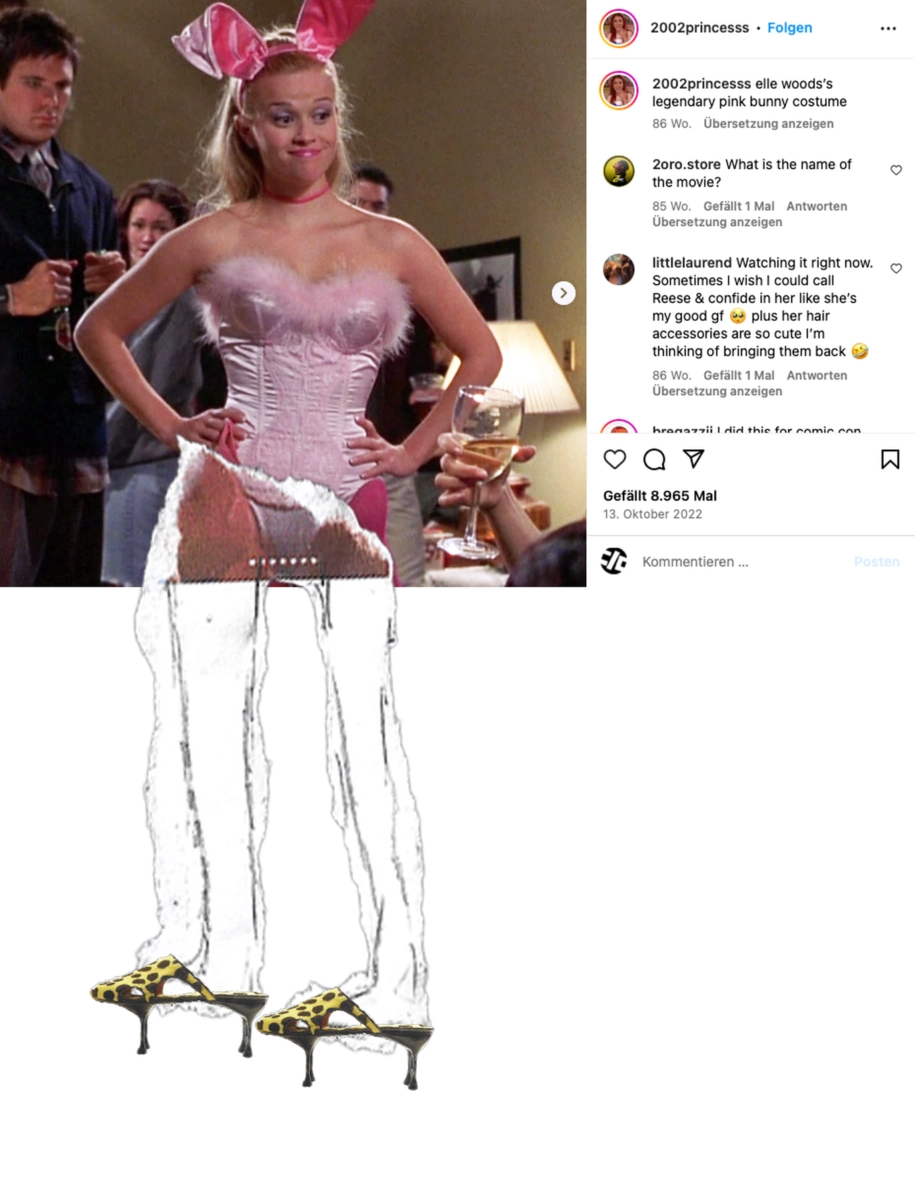
Clichés on the screens are pop culture: Willie Dynamite, a charismatic pimp in 1970s New York, wants to become the city's number one in the action film of the same name. Thirty years later, Reese Witherspoon hops through the comedy „Legally Blonde“ in a pink bunny costume - as a supposedly naive blonde with the goal of becoming a lawyer.
Movies like “Willie Dynamite” (action/thriller 1973) and “The Mack” (drama 1973) stereotyped young black men in fur coats as pimps or hustlers.
I don’t think those stereotypes apply any more. Women aren’t labeled as prostitutes or trophy wives and men aren’t labeled as pimps or hustlers these days just for wearing fur.
Or people deliberately toy with that image. Belgian designer Martin Margiela’s 1997 fall/winter show featured models on the catwalk in fur wigs from the Austrian-German label Bless. British designer Alexander McQueen also blurred the boundaries between animal and human in his collections. Fur seems to be a perennial favorite.
According to legend, the person wearing the animal skin becomes imbued with that animal’s characteristics. In a robe of lion’s fur you’re the king (of the animals), in a leopard coat you radiate wild grace. But there is also an authoritarian gesture inherent in wearing fur; it implies the right to hunt predators. And writer Leopold Ritter von Sacher-Masoch (1836-1895) also depicts Venus in an impeccably tailored fur coat.
We shave our bodies to be hairless, but kill animals to wear their fur on our bodies. Do you see a parallel?
Obviously it isn’t about nature, it’s about artifice. The fur we wear has been artfully crafted by the furrier. Only by removing its hair does the body become art.
„Inhuman exploitation!“
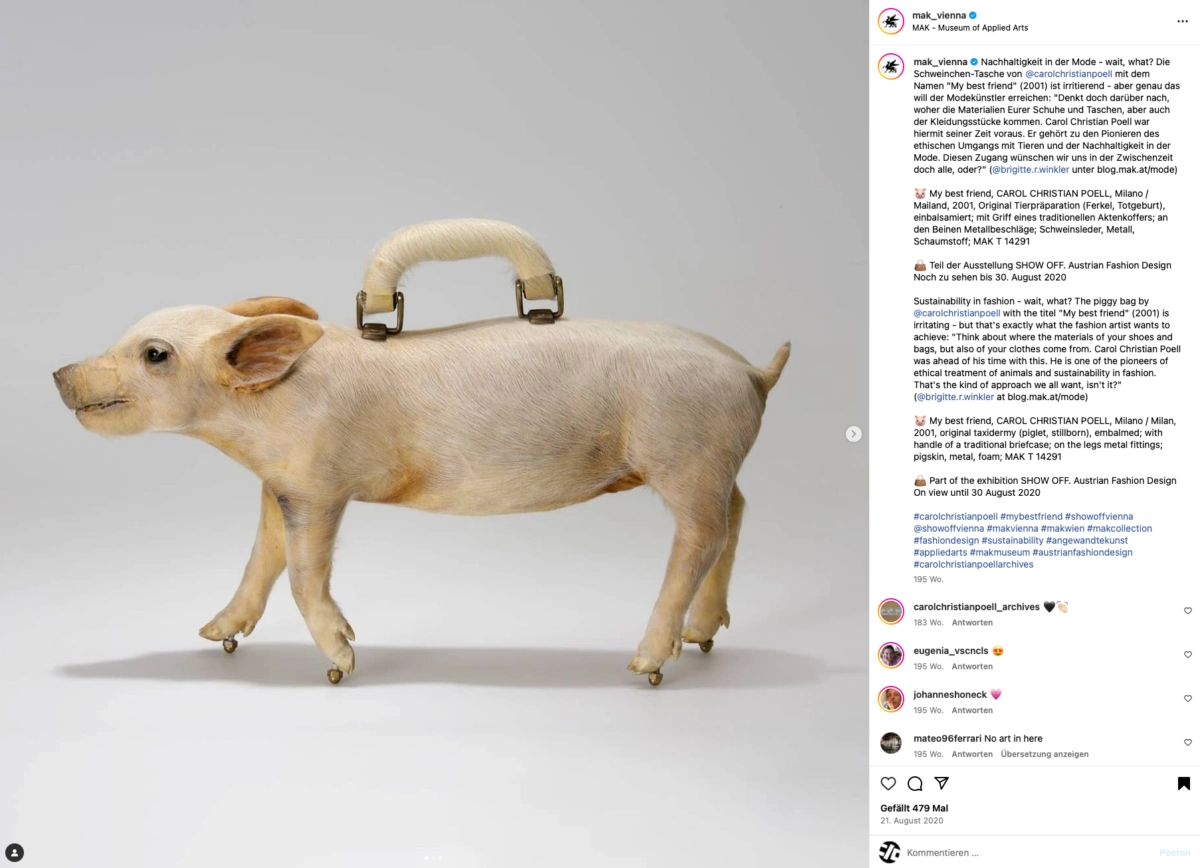
„My best friend“ - a macabre declaration of love and arguably one of the most provocative handbags in fashion history. In 2001, Austrian fashion designer Carol Christian Poell created this unique piece from a stuffed piglet, radically challenging the boundaries between fashion, art and ethics. In 2020, it was part of the SHOW OFF exhibition at MAK Vienna.
Austrian fashion designer Carol Christian Poell, born in Linz in 1966, pushes those boundaries: He has knitted pig intestines into sweaters, created a material from human hair, and designed a pig bag. Pretty radical use of materials. Would you wear clothing made from human hair?
No, never. I associate that with the Nazis’ “Menschenverwertung,” the exploitation of human remains, in the concentration camps. In “Der Gott dieses Sommers,” the German writer Ralf Rothmann (1953) describes this barbarically inhumane “utilization” of human hair.
Austrian crooner Hansi Hinterseer in fur moonboots, the alien Alf in the eponymous sitcom, or Chewbacca from “Star Wars”. They all present fur in a different light. What are the most bizarre fur outfits in terms of fashion history and pop culture?
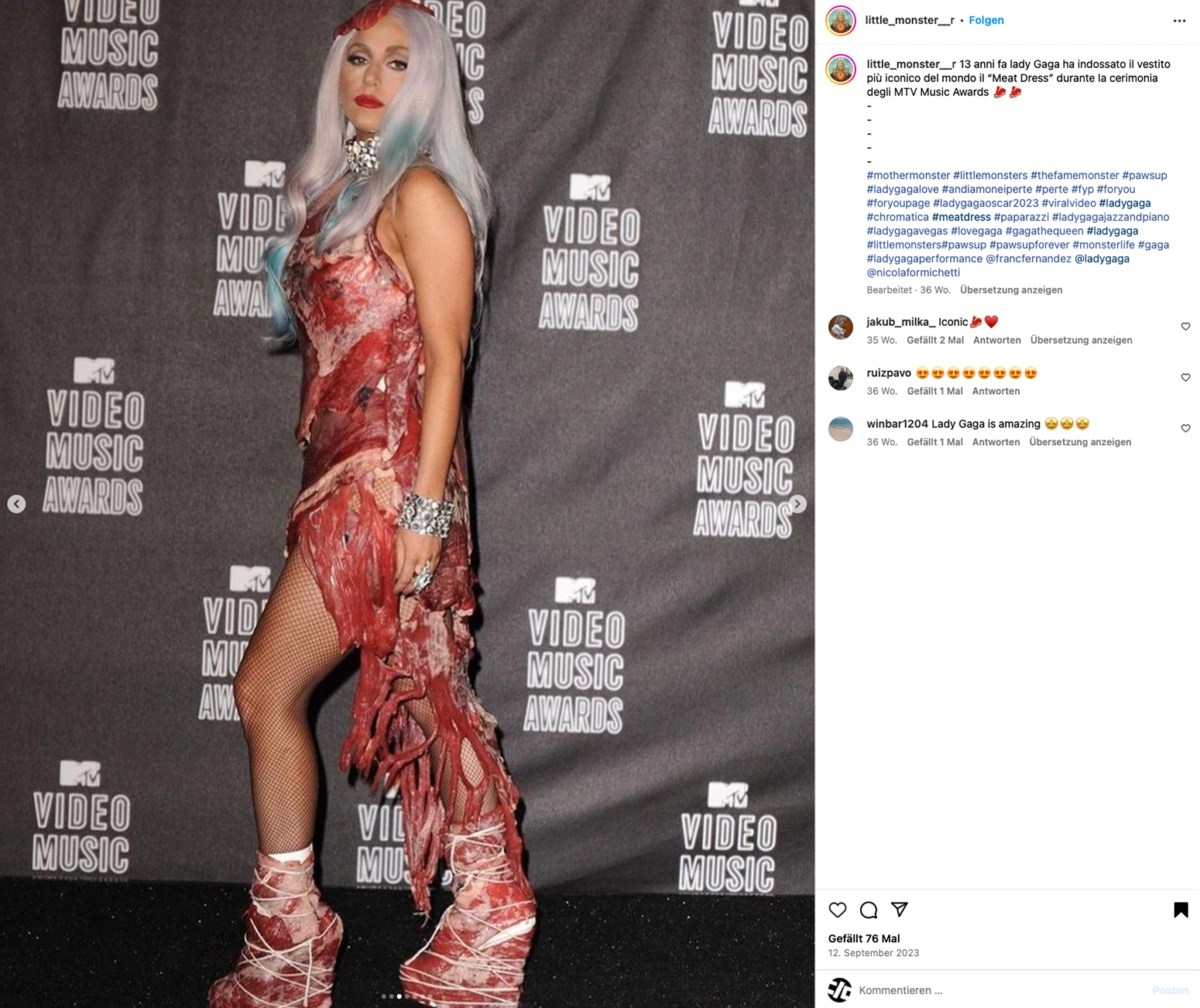
Lady Gaga wore a 20-kilogram dress made of beef at the 2010 MTV Video Music Awards.
„20-kilogram dress made of beef!"
The legendary meat dress by American designer Franc Fernandez, worn by Lady Gaga at the 2010 Video Music Awards when she received the Video of the Year Award for „Bad Romance“, was professionally preserved after the performance - dried and prepared. Fernandez told USA Today that he sourced the beef from his family's slaughterhouse and spent two days crafting the dress.
Meat, skin, fur - an animal is an animal. What was behind that idea?
A lot of irony. She slipped into an unwearable dress, or rather into the unwearable role of a woman literally being treated like fresh meat—a statement against sexism.
What is your favorite fur moment?
The great Black jazz divas. In the middle of the last century they began to appropriate a luxuriously opulent style. Once they were finally able to afford these fantastic fur coats, they complained that the whites tried to put them off it with moral arguments. Or maybe a lady in Paris who casually threw on her mink in lieu of a dressing gown to pick up her granddaughter from school across the street for lunch.
„In a robe of lion’s fur you’re the king (of the animals).“
The majority of furs traded come from farmed animals such as minks, foxes and raccoon dogs, which are kept on fur farms. Unfortunately, cramped cages and slaughter after only a short life are not uncommon.
Since when has real fur been considered morally reprehensible?
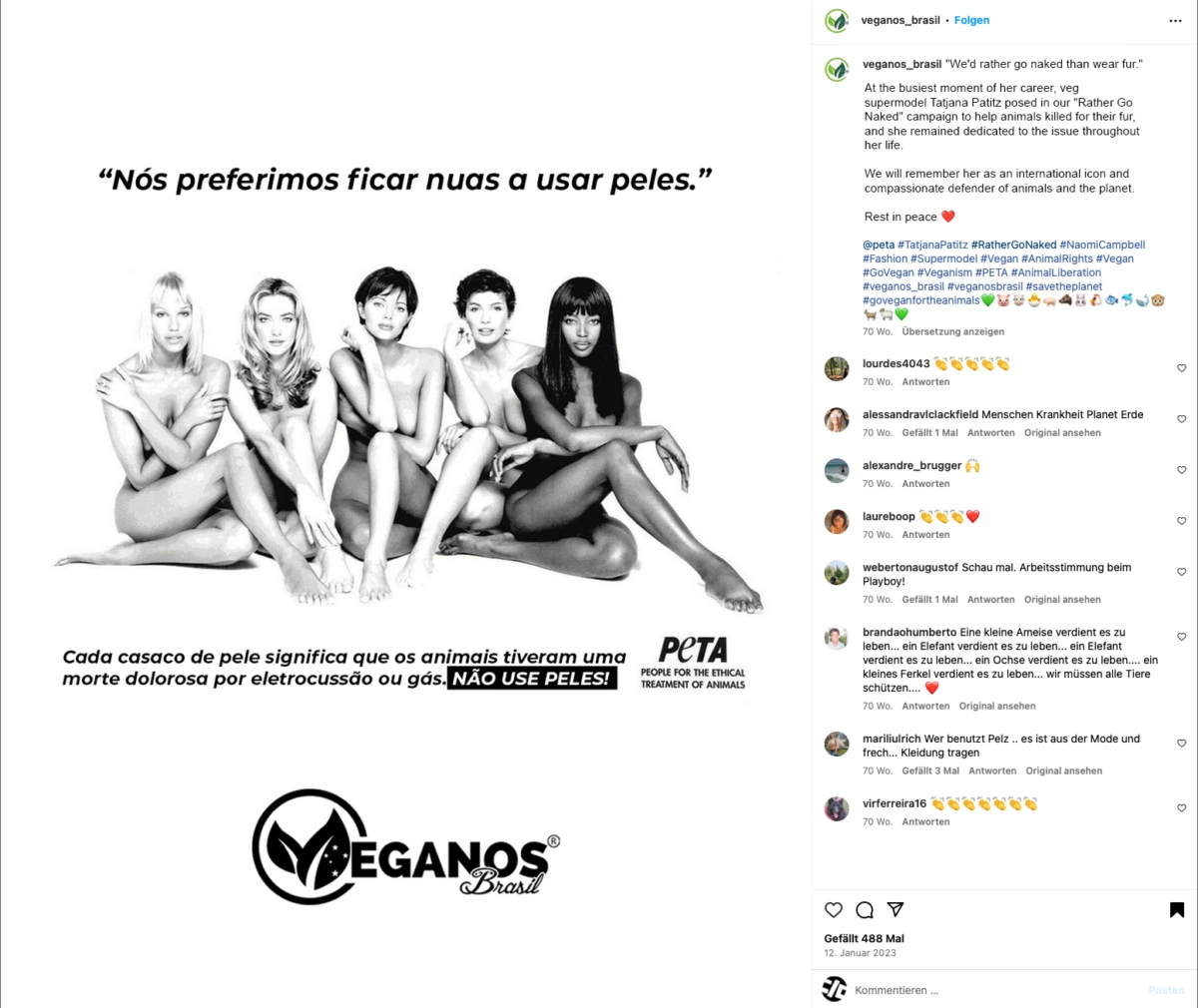
At latest since the PETA campaign “I’d rather go naked than wear fur!” in 1994, in which top models Naomi Campbell and Cindy Crawford posed nude to protest against fur. That was a key moment. The animal rights organization PETA claimed that fur was immoral, even disgusting. Not beautiful, but bloody and associated with carrion and meat.
Minks, foxes, and other animals are bred on fur farms, usually crammed into small cages and killed. Undercover footage shows that animals are often skinned alive. Several million minks were killed in Denmark during the corona virus pandemic.
That doesn’t just happen to fur animals, it is a result of factory farming in general. It’s just as bad with chickens and pigs. That needs to be changed overall. Industrial-scale farming of fur animals is also cruel, obviously. The killing of minks in Denmark was ordered as a result of the pandemic. Use of the pelts was prohibited, they were destroyed.
„Cruel!"
PETA launched its „I'd rather go naked than wear fur!“ campaign for the first time in 1990 - with great success. Even supermodels such as Naomi Campbell and Cindy Crawford went naked for the campaign, but later wore fur on the catwalk again, causing outrage among animal rights activists.
Artificial fur was developed in response to such concerns, today there are even efforts underway to produce fur in laboratories. What kind would you choose?
Secondhand real fur—I’m glad that these furs are being recycled. If you store them properly, they stay soft and supple.
Karl Lagerfeld’s motto at Fendi was: “Fur is Fendi and Fendi is fur.” The Italian label has stuck to this motto even after the designer’s death, but is now investing in lab-grown fibers. Is fur dying out?
No, I don’t think so. The whole world is wearing fur again. It’s too sustainable and too practical—and also too beautiful. You can live in a fur coat for decades. Fur outlives people, it’s no coincidence that people inherit fur coats from their grandmothers.
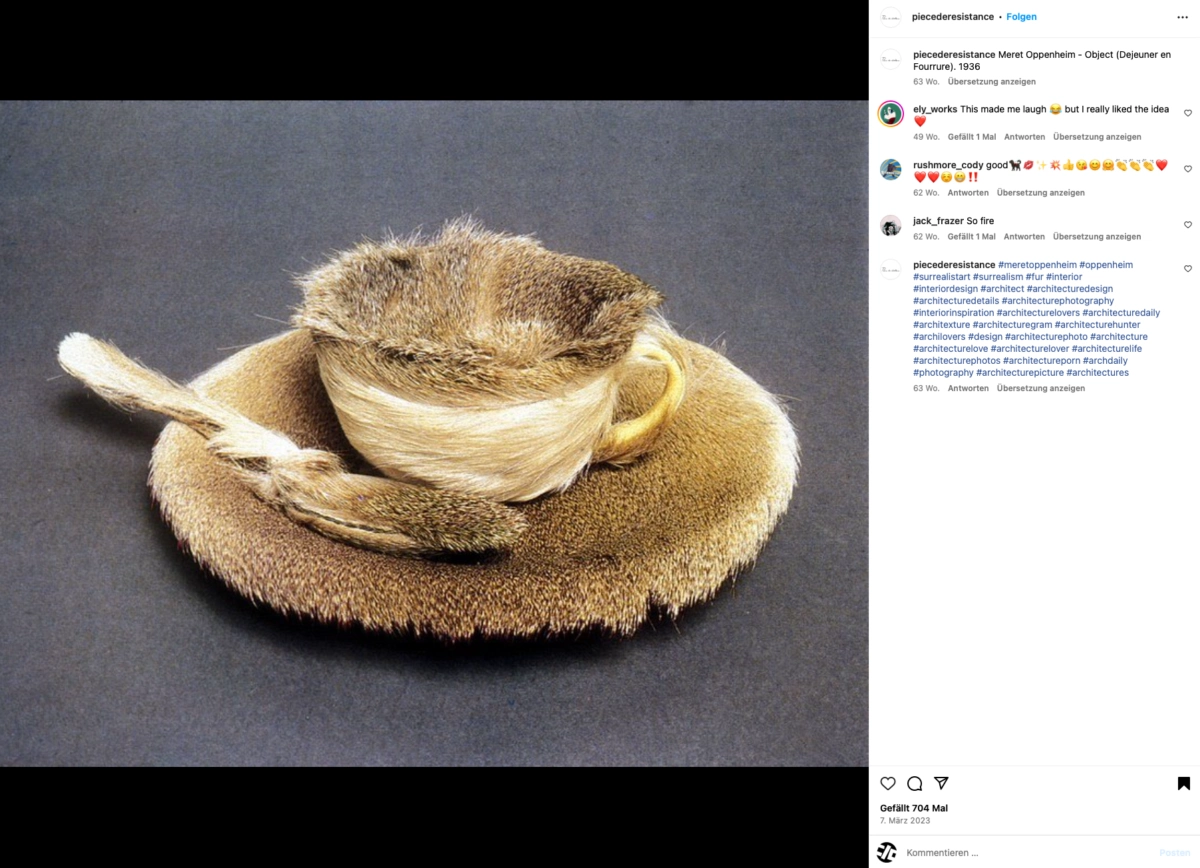
The artwork „Object (Le Déjeuner en fourrure)“, known in German-speaking countries as „Frühstück im Pelz“, was created in 1936 by the German-born surrealist Méret Oppenheim (*1913-1985).
Your observations seem to contradict the agenda being pursued by the high fashion brands. Gucci, Coach, and many more have completely abandoned real fur in their collections. The last mink farm in Germany closed in 2019. How do you explain that discrepancy?
The big fashion houses are currently turning their backs on fur. It is (still) a taboo there. Fur is evolving back into a utilitarian item—in Munich, I saw a homeless lady pushing her belongings in a shopping cart and wearing a beautiful, floor-length mink coat to protect her from the cold. Fur is going underground—young people who associate it with a defiant attitude wear vintage fur.
In protest against ...
... Moralistic finger-waging and fur as an upper-class status symbol.
This interview appeared in print edition 7/2024, „The Animal Issue.“ You can order the magazine from our SHOP.
Barbara Vinken is Professor of Comparative Literature at the Ludwig Maximilian University of Munich (LMU). Her research focuses on French literature from the 18th to 21st centuries as well as fashion theory and cultural history. Vinken has taught in Hamburg, Zurich, Paris, New York, Chicago, and Harvard. Her widely read publications include “Die deutsche Mutter,” “Mode nach der Mode,” “Angezogen: Das Geheimnis der Mode,” and “Diva: eine andere Opernverführerin.”